What Does a Commercial Cleaning Company Actually Handle for Coon Rapids, MN Businesses?

Keeping a commercial facility clean involves more than emptying trash bins and wiping down visible surfaces. Businesses in Coon Rapids, MN may need regular attention to offices, restrooms, break rooms, floors, entrances, and shared spaces to maintain a professional environment. Understanding what a commercial cleaning company handles helps business owners identify which tasks should be included in their cleaning plan, how frequently each area needs attention, and when specialized services may be necessary. With a well-organized cleaning routine, businesses can manage everyday maintenance while allowing employees to focus on their primary responsibilities.
1. Office and Workspace Cleaning
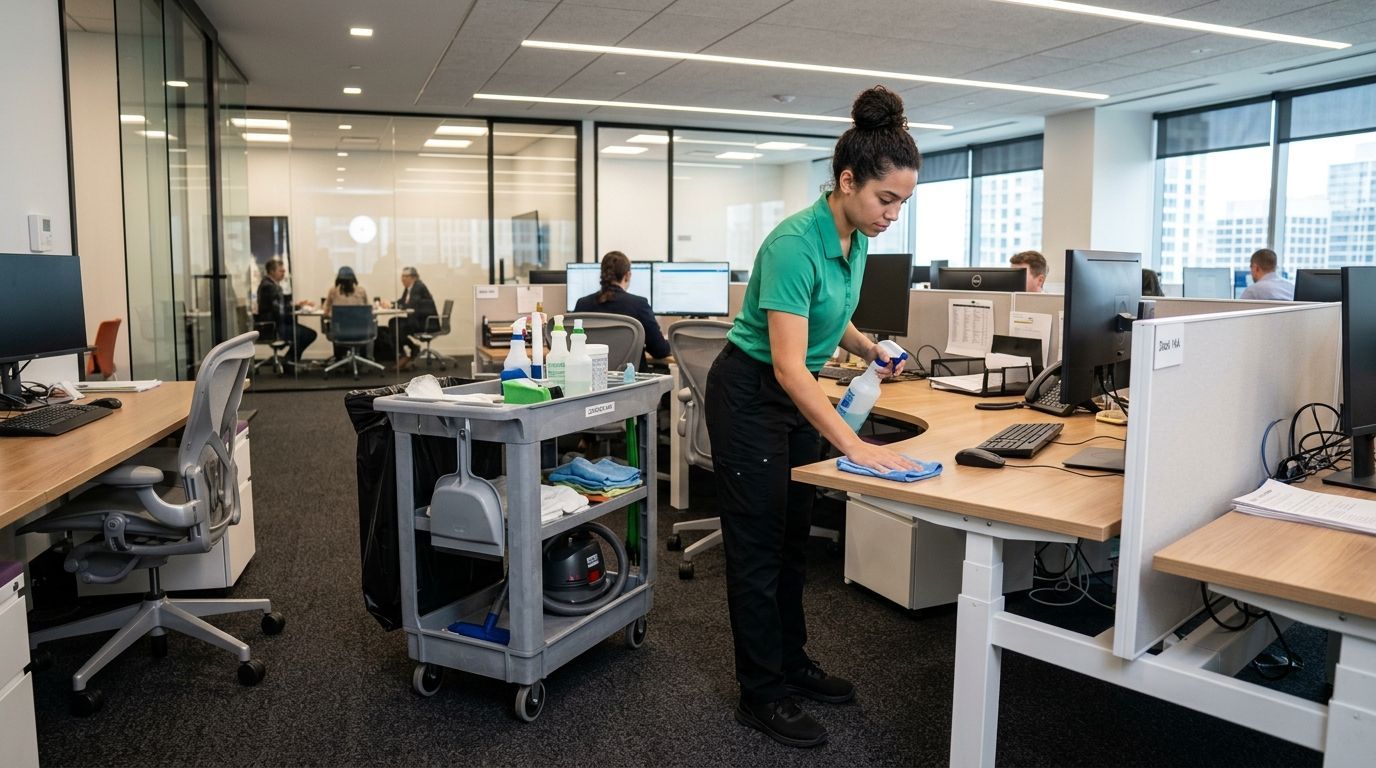
Offices experience daily activity that can leave dust, fingerprints, paper waste, and debris across desks, meeting rooms, reception areas, and shared workspaces. Without consistent maintenance, these areas can become cluttered and appear poorly maintained.
Commercial office cleaning typically includes dusting accessible surfaces, emptying wastebaskets, vacuuming carpets, mopping hard floors, and cleaning shared tables and common areas. Reception desks and conference rooms may need particular attention because employees, customers, and visitors frequently use them.
The exact scope depends on the facility and service agreement. Businesses should clarify which surfaces and rooms are included so the cleaning routine reflects their actual needs.
2. Restroom Cleaning and Maintenance
Restrooms require consistent attention because they are used repeatedly throughout the workday. Sinks, toilets, counters, mirrors, fixtures, and floors can quickly accumulate dirt and residue.
Depending on the agreed service plan, commercial restroom cleaning may include cleaning and disinfecting appropriate surfaces, removing trash, mopping floors, and checking dispensers or supplies when restocking is included.
The right cleaning frequency depends on restroom usage, the number of employees and visitors, and the type of facility. A busy commercial property may need daily service, while a smaller office may require a different schedule.
Businesses should also establish clear procedures for reporting supply shortages, plumbing issues, spills, or maintenance problems that fall outside routine cleaning.
3. Break Room and Kitchen Cleaning
Break rooms and shared kitchen areas often collect food crumbs, spills, grease, fingerprints, and waste. These spaces can become messy quickly when multiple employees use them throughout the day.
Commercial cleaning may include wiping suitable countertops and tables, cleaning sinks, removing trash, sweeping and mopping floors, and maintaining other agreed surfaces. Appliances may be cleaned externally as part of routine service, while interior appliance cleaning should be confirmed separately.
Businesses should establish expectations for personal dishes, stored food, refrigerators, and employee belongings. Clear guidelines help prevent confusion about what the cleaning team is responsible for handling.
4. Commercial Floor Cleaning and Care
Floors are among the most heavily used surfaces in many commercial buildings. Employees, customers, delivery personnel, and visitors bring in dirt and debris that accumulate in entryways, corridors, reception areas, and workspaces.
Routine floor cleaning may include sweeping, vacuuming, mopping, and spot cleaning. Additional services can include carpet extraction, machine scrubbing, or other specialized treatments suited to the flooring material.
Businesses in Coon Rapids also need to consider Minnesota's winter conditions. Snow, slush, moisture, and road salt can be tracked indoors, particularly around entrances and hallways. These areas may require more frequent cleaning during winter to manage visible buildup.
The correct floor care method depends on the surface. Carpet, tile, vinyl, and other flooring materials have different maintenance requirements, so businesses should discuss suitable methods with their cleaning provider.
5. Trash Removal and Common Area Maintenance
Trash removal is a basic part of many commercial cleaning plans, but the amount of service required varies by facility. Offices, break rooms, restrooms, and customer areas can generate different types and quantities of waste.
Routine service may include emptying wastebaskets, replacing liners when included, and moving collected trash to the building's designated disposal area. Recycling collection can also be arranged when it forms part of the agreement.
Common areas such as hallways, waiting rooms, entrances, and shared lounges may need sweeping, vacuuming, dusting, and surface cleaning. Regular attention helps these spaces remain orderly and presentable.
Businesses should clarify whether cleaning staff are expected to handle recycling, large waste items, confidential documents, or materials requiring special disposal. These tasks may fall outside a standard janitorial agreement.
6. High-Touch Surface Cleaning
Door handles, light switches, shared tables, counters, railings, and other frequently touched surfaces can collect dirt and residue through normal daily use.
Commercial cleaners can include appropriate surface cleaning in the routine service plan. Where disinfection is required, the scope should identify the surfaces involved and the products and procedures to be used.
This service can be particularly useful in offices, retail environments, shared facilities, and buildings with frequent visitor traffic. Regular attention to these surfaces supports a consistent workplace hygiene routine.
Businesses should remember that cleaning and disinfecting are not identical tasks. Disinfection requirements should be discussed explicitly rather than assumed to be included in every general cleaning visit.
7. Deep Cleaning for Areas That Need Extra Attention
Routine cleaning handles recurring tasks, but some areas need more detailed work periodically. Dirt and grime can accumulate along baseboards, floor edges, corners, fixtures, and other locations that receive less attention during everyday maintenance.
Commercial deep cleaning may include detailed restroom cleaning, thorough floor care, baseboard cleaning, and additional attention to neglected surfaces. The exact services depend on the property's condition and the cleaning provider's capabilities.
Businesses can schedule deep cleaning seasonally, after a particularly busy period, or when a facility needs a more thorough reset. Combining deep cleaning with regular janitorial service helps address both everyday messes and gradual buildup.
8. Cleaning for Different Types of Commercial Facilities
Not every business needs the same cleaning routine. A professional office, retail store, restaurant, school, warehouse, and fitness center all have different layouts, surfaces, and patterns of use.
For example, retail spaces may need frequent attention to sales floors, entrances, display areas, and customer restrooms. Restaurants may require a clearly defined scope for dining areas, floors, and approved kitchen-related tasks. Schools and fitness facilities may need more frequent attention to shared spaces and high-use surfaces.
Industrial and warehouse environments may have specialized requirements involving equipment, dust, debris, or operational safety. These tasks should be discussed separately to ensure that the cleaning team has the appropriate training, equipment, and procedures.
A customized cleaning plan allows businesses to prioritize the areas that matter most instead of relying on one identical checklist for every type of property.
9. Window, Glass, and Interior Surface Cleaning
Glass doors, interior partitions, mirrors, and accessible windows can collect fingerprints, dust, and smudges. These marks are especially noticeable in reception areas, conference rooms, and customer-facing spaces.
Depending on the service agreement, cleaning may include accessible interior glass, mirrors, glass partitions, and selected fixtures. Exterior window washing and work at height may require separate equipment, scheduling, or specialized services.
Businesses should confirm which glass surfaces are included in routine visits and whether detailed window cleaning is offered as an additional service. This helps ensure that expectations match the actual scope of work.
10. Scheduled Janitorial Services
Janitorial services bring routine cleaning tasks together under an agreed schedule. Depending on the facility, visits may take place daily, several times per week, weekly, or at another suitable frequency.
A janitorial plan may combine trash removal, restroom maintenance, floor cleaning, dusting, break room cleaning, and common area upkeep. Businesses can also identify priority areas that need more frequent attention than the rest of the building.
Before service begins, it is helpful to establish a written checklist, confirm access arrangements, specify preferred cleaning times, and identify any restricted areas. A clear plan makes it easier to understand which tasks are completed during each visit and where additional service may be needed.
How to Determine What Your Business Needs
Before hiring a commercial cleaning company, Coon Rapids businesses should review their facility's layout, usage, and maintenance requirements. Consider the following questions:
- How many employees and visitors use the building each day?
- Which areas become dirty the fastest?
- How often are restrooms and break rooms used?
- What types of flooring need routine maintenance?
- Does the facility need daily cleaning or less frequent service?
- Are deep cleaning, carpet cleaning, or specialized floor care needed?
- Are there areas that require special products or procedures?
- Which tasks are included in the quote, and which cost extra?
Once these details are established, the business can develop a cleaning plan that reflects its priorities and budget. Reviewing the arrangement periodically helps keep the service aligned with changes in staffing, customer traffic, and facility use.
Professional Commercial Cleaning in Coon Rapids, MN
Coon Rapids Commercial Cleaning provides professional cleaning solutions for businesses and commercial facilities in Coon Rapids, MN. Services can be organized around the needs of offices, retail spaces, restaurants, schools, fitness facilities, and other commercial properties.
Depending on your facility's requirements, a cleaning plan may include commercial office cleaning, janitorial services, restroom cleaning, break room maintenance, commercial floor care, high-touch surface cleaning, and deep cleaning. Service frequency and task coverage can be tailored to the building's usage and operating schedule.
Understanding what a commercial cleaning company handles helps you set clear expectations and choose the services your facility actually needs. With a practical, consistent cleaning plan, your business can manage everyday maintenance, maintain a professional appearance, and give employees more time to focus on their work.